The data can be traced and the construction noise monitoring system helps with environmental law enforcement and evidence collection
2025-12-20 11:31:35
During the construction process, high-intensity noise is generated in areas such as earthwork excavation, pile foundation construction, concrete pouring, steel structure installation, and equipment operation (such as excavators, rollers, and tower cranes). This type of noise has the characteristics of "intermittent strong, instantaneous high decibel, and wide impact range". Especially in construction projects near urban centers, residential areas, schools, and hospitals, construction noise can easily interfere with the sleep, study, and work of surrounding residents, causing a large number of livelihood complaints, and even triggering neighborhood conflicts and obstruction events, resulting in delayed construction progress. At the same time, long-term exposure to construction noise environment can also damage the hearing health of frontline construction personnel and increase safety production risks. Therefore, construction noise monitoring systems have become necessary for managing noise pollution and ensuring environmental quality. Tools.
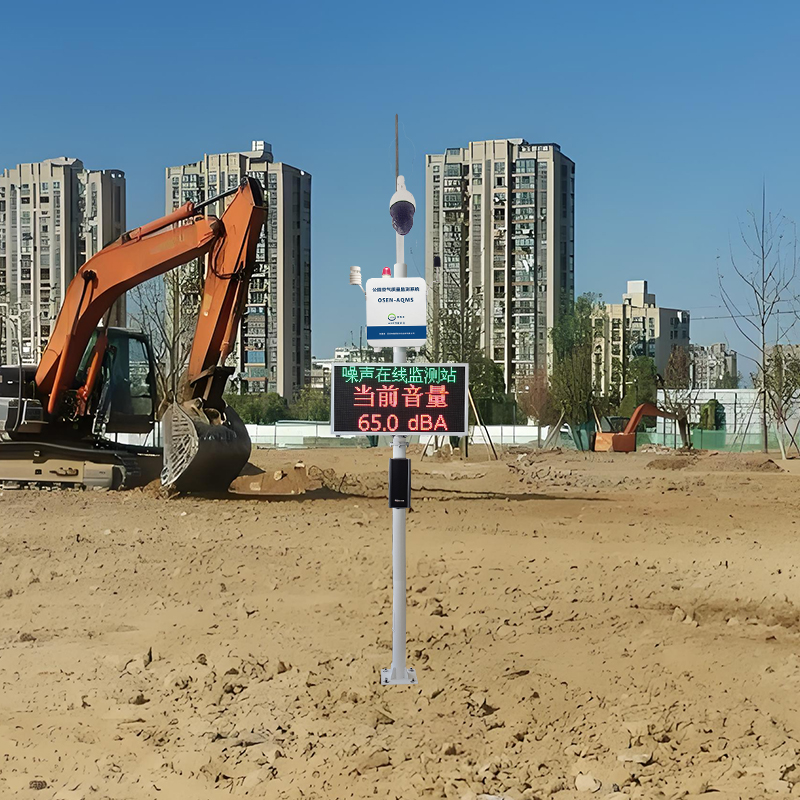
The OSEN noise online monitoring system is interconnected with on-site instruments and meters through IoT technology to complete real-time collection of environmental noise data. It is used to measure various acoustic evaluation quantities such as frequency weighted and time weighted sound pressure levels, equivalent continuous sound levels, and statistical sound levels of various types of noise. It has functions such as integral averaging and statistical analysis, and the data is transmitted back to the backend supervision platform in real time.
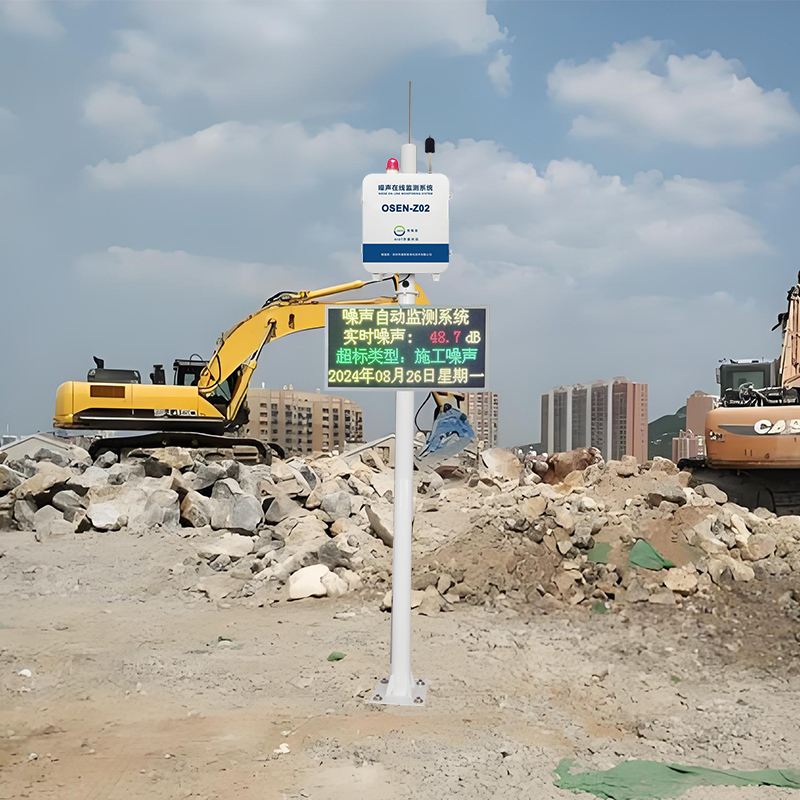
component
(1) All-weather outdoor microphone
Outdoor microphones are designed to withstand wind, rain, dust, and interference for long-term continuous outdoor use. The wind cover of outdoor microphones can interfere with the accuracy of noise testing. The outdoor sensors used in our company´s environmental noise online monitoring system have obtained the Chinese Type Approval Certificate (CPA) for measuring instruments
(2) Noise collection and analysis unit
The noise acquisition and analysis unit has signal acquisition and data analysis functions, while ensuring data storage. The noise acquisition and analysis unit of the online monitoring system for environmental noise is not simply a sound level meter placed inside for signal acquisition, but uses an industrial grade industrial computer to develop signal acquisition software suitable for automatic noise monitoring systems
(3) Communication unit
Implement data communication from the noise substation to the noise monitoring system software server. The online monitoring system for environmental noise adopts 4G wireless communication, which can meet the basic data transmission of the system and ensure stable transmission.
(4) Power control unit
Provide power supply to prevent the impact of external power supply jitter on measurement accuracy and protect the noise monitoring substation from external surge attacks.
(5) Chassis
The environmental noise in the online monitoring system adopts an all-weather protective box that meets the IP65 standard and has a level certificate. It can be used to place noise collection and analysis units, data acquisition boards, power control units, etc., playing a role in wind, rain, and theft prevention.
(6) Ball camera and microphone
Real time monitoring of the on-site environment can be achieved, and if the data exceeds the standard, on-site environment recording and noise pickup can be realized. Through the platform playback function, the actual situation on site can be viewed.
(7) Sound column
This configuration can achieve remote calling function. Management personnel can view the situation on site through remote cameras. If serious noise pollution behavior is found, remote calling can be carried out through the APP. After hearing the instructions, on-site personnel can make corrections. At the same time, they can communicate with the back-end management personnel through the on-site equipment microphone.
(8) Omnidirectional radar
Directional pickup within a 360 ° range, environmental noise monitoring, special audio event detection, and sound source localization can eliminate noise interference from other directions, focusing only on the size of the sound source in the designated area.
Keyword: