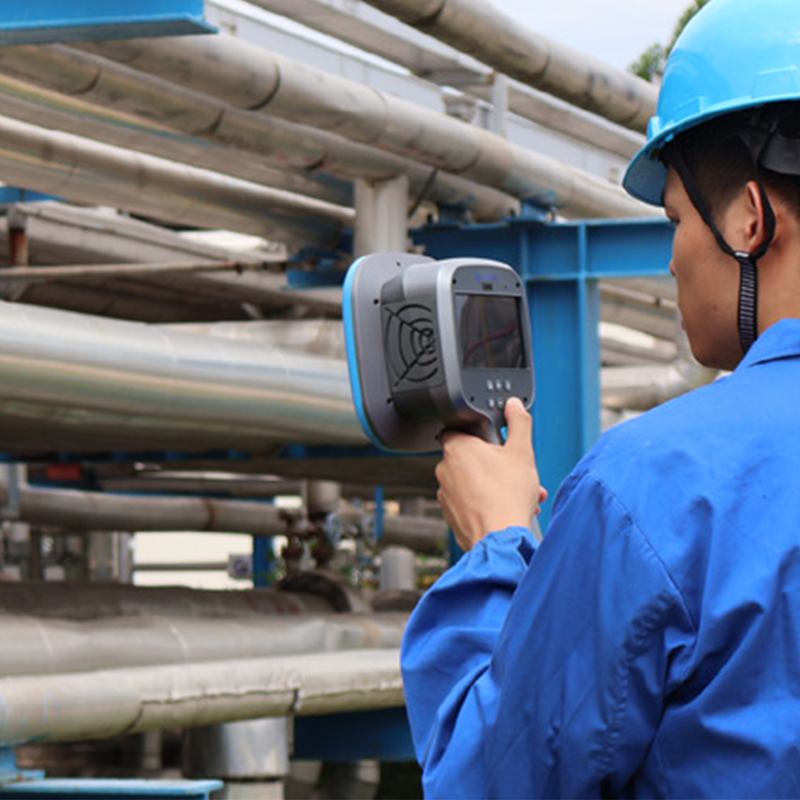
The OSEN handheld acoustic imaging device is efficiently applied in various scenarios
2025-12-20 11:20:26
Pipeline gas leakage and power plant partial discharge are both highly concealed and harmful safety hazards. Traditional monitoring methods are difficult to meet the precise prevention and control needs. In the scenario of pipeline gas leakage, natural gas, liquefied petroleum gas, industrial toxic and harmful gases and other transportation pipelines are prone to micro leaks due to corrosion, aging, construction damage, etc. The high-speed injection of leaked gas will produce acoustic signals of specific frequencies. However, such leaks mostly occur in underground pipelines, high-altitude pipe galleries or remote areas, with the characteristics of "multiple points, long lines, concealed locations, and large fluctuations in leakage volume". Early micro leaks are difficult to detect, and once they spread, they can easily cause major safety accidents such as explosions and poisoning; In the scenario of partial discharge detection in power plants, high-voltage switchgear, cable joints, insulators, transformers and other electrical equipment may experience partial discharge under conditions such as insulation aging, poor contact, and moisture. Accompanied by characteristic ultrasonic signals, if partial discharge is not detected in a timely manner, it will gradually exacerbate equipment damage, ultimately leading to short circuits, tripping, and even large-scale power outages. Power equipment is mostly distributed in distribution rooms, outdoor towers and other scenarios, and some equipment is in a high-voltage live state. Conventional monitoring is difficult to investigate up close.
The handheld acoustic imaging device is equipped with a low-noise MEMS microphone and supports adjustable bandwidth range. Quickly detect pressurized air leaks or partial discharges in high-pressure systems in industrial environments, and image them in cloud form to accurately mark the location of the sound source. According to ergonomic design principles, it is convenient to grip and adjust. External infrared thermal imaging device can be used to achieve multi functionality. By using 128 acoustic sensors to enhance detection sensitivity, signals in the 48kHz ultrasonic frequency band can be detected. And in terms of testing BSR (Buzz, Squeak, Rattle) noise. This product has a wide range of sound wave monitoring, which enables more accurate and faster sound (fault point) localization; And by using system algorithms to shield invalid sound waves, false alarms can be avoided, making it easy for operators to use.
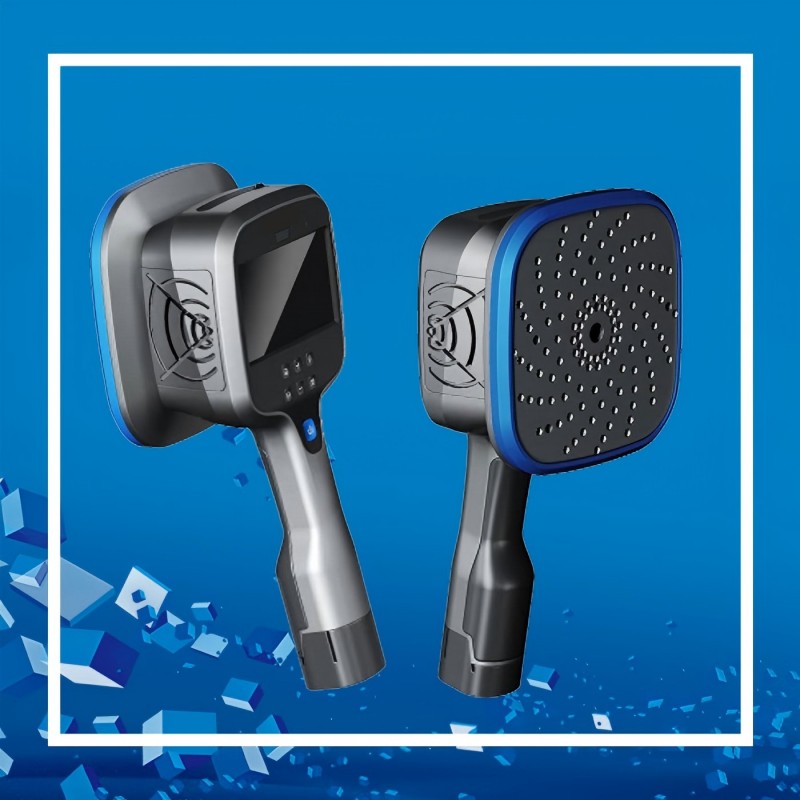
Product Features
Support real-time detection of sound wave intensity within the scene and localization of sound source location;
Support video recording, photography, and album management;
Support wireless connection, Bluetooth short-range transmission, 4G full network communication;
Support external thermal infrared imaging module;
The device is equipped with a 7-inch high brightness color touch screen, with a simple and intuitive operation interface.
Product features
Visual localization of sound sources
Capable of converting sound into intuitive visual images. By using a high-sensitivity microphone array to quickly capture small sound changes, and utilizing beamforming algorithms to accurately locate and analyze the sound source, the fault location is ultimately displayed intuitively in the form of a sound field cloud map.
Multi frequency acoustic imaging technology
The device supports audible and ultrasonic frequency bands, equipped with high-precision MEMS sensors and 128 high-sensitivity digital microphones, capable of capturing sound waves of different frequencies, strictly filtering out environmental noise, and easily detecting real sound source signals to ensure detection accuracy.
Partial discharge and gas leakage detection
In the power system, high-frequency sound waves generated by partial discharge can be quickly captured, and real-time PRPD maps can be displayed to help maintenance personnel accurately locate discharge points. At the same time, the high-sensitivity sound array can also help maintenance personnel quickly locate the source of gas leaks, display and evaluate the leakage amount in real time, and provide scientific basis for the health management of equipment.
Portability and efficiency
The device adopts a one handed handheld design, with a lightweight weight of 900g or 1.5kg, making it convenient for testing personnel to carry and conduct testing anytime and anywhere. At the same time, with high-resolution beamforming technology, it can quickly collect and identify steady-state and transient sound sources, capture any leakage, partial discharge, or abnormal noise signals in a very short time, and display them in images, greatly improving inspection efficiency and accuracy.
Data recording and analysis
Handheld acoustic imaging devices can record and store detection data, facilitating subsequent analysis and report generation. During the detection process, the device can save the results as high-definition images or videos, fully recording the location and characteristics of abnormal sounds, providing intuitive and reliable basis. Meanwhile, the measurement data can be transmitted to the upper PC via USB for further analysis and management.
Keyword: