How can the OSEN noise monitoring system achieve automated control of substation noise
2026-04-28 16:32:17
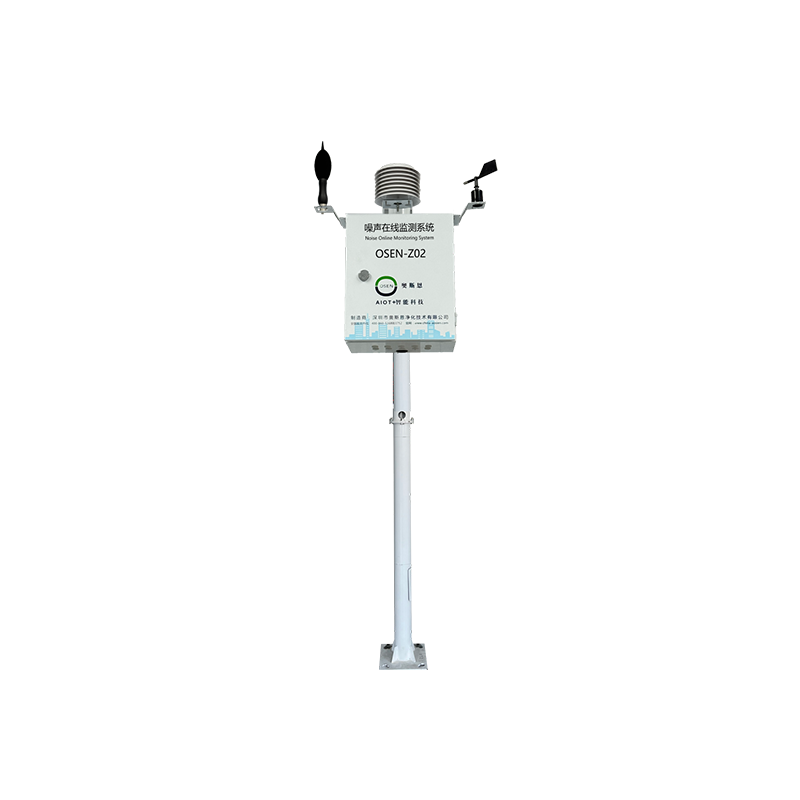
The OSEN substation noise monitoring system is a comprehensive monitoring platform that integrates noise monitoring equipment, efficient data communication technology, and intelligent computer application software. The system consists of two core parts: a noise monitoring substation and a noise monitoring system.
The noise monitoring substation, as a key unit for on-site data collection, is responsible for real-time collection of noise signals and meteorological parameters, and has the ability to conduct preliminary analysis and processing of raw data. The noise monitoring system serves as the data processing and management center of the entire monitoring system, responsible for real-time monitoring of the operating status of each substation, centralized storage and deep processing of monitoring data, multidimensional statistical analysis, and automatic generation of various reports.
Through the collaborative operation of two parts, the full process automation and intelligent management of noise monitoring work can be fully realized, effectively applicable to the long-term, continuous, and high-precision monitoring needs of various substations and converter station boundary noise.
System Features
1. Strong environmental adaptability
It can work normally in environments with temperatures ranging from -30 ℃ to+50 ℃, relative humidity of 0% to 99.99% RH (non condensing), and air pressure ranging from 65kPa to 108kPa. Its protection level reaches IP55 and it has the ability to prevent wind, rain, dust, and frost.
2. Excellent anti-interference performance
Meets the RF interference limit requirements of GB 4824, and has undergone multiple electromagnetic compatibility and immunity tests such as electrostatic discharge, power frequency magnetic field, and surge, making it suitable for complex electromagnetic environments in substations.
3. High measurement accuracy
The noise collection and analysis unit shall not be lower than the requirements of a level 2 sound level meter, with a measurement range of 25dB (A)~135dB (A), supporting A, C, Z frequency weighting and F, S, I time weighting.
4. Comprehensive functionality
Equipped with functions such as noise recording, storage, remote self-test, and octave band analysis, it can calculate multiple types of noise evaluation parameters and support the expansion function of interference noise removal
5. Data security and reliability
The data transmission meets the requirements of HJ 660, with confidentiality and security (in accordance with GB/T 30269.602), the database prevents tampering or deletion of raw data, and the operation log records the entire process.
6. Easy and convenient maintenance
Support remote monitoring and operation, automatic warning of equipment failures, and reduce on-site operation and maintenance workload.
Keyword: